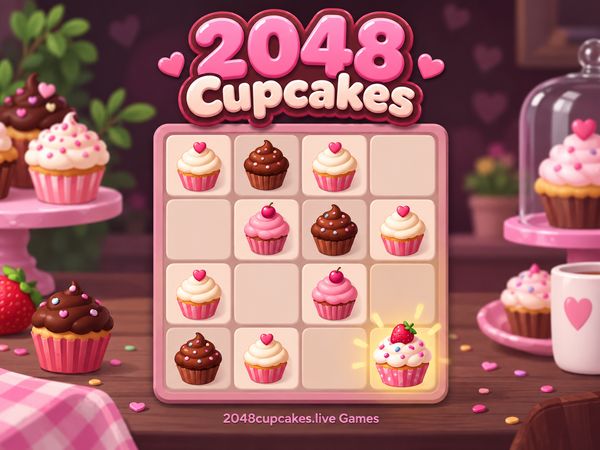
Sliding a tray of frosted treats across a four-by-four board hits different than watching plain numbers stack up. 2048 Cupcakes takes the familiar merge-and-slide puzzle and dresses every tile as a real bakery item, starting from a plain vanilla birthday cupcake and climbing toward rich, high-calorie showstoppers. Match two identical treats and they bake up into the next tier instantly, right there on the grid.
Arrow keys or WASD both move the whole board at once, and every push either opens up new merges or boxes you into a corner. It's the same tight, tense loop that made the original number puzzle addictive, just wearing frosting instead of digits.
What makes this version tricky is reading pastries instead of numbers under pressure. Start playing 2048 Cupcakes now and see how fast your eyes adjust to sugar and icing instead of plain math.
How Pastry Merging Operates in 2048 Cupcakes
Every move sends the whole board sliding in one direction at once. Tiles that share a treat crash together and bake into something bigger, tier after tier, until you run out of room or run out of matches.
The Calorie Promotion System
Push arrow keys or WASD and every pastry tile on the grid slides the same direction, all at once. Nothing moves alone here — the whole board shifts together until a tile hits the wall or another treat. When two matching cupcakes touch during that slide, they don't just stack. They combine into a single, higher tier pastry with fresh artwork and a bigger calorie count.
A vanilla birthday cupcake starts the chain at 200 Kcal, the lowest rung on the ladder. Merge two of those and you get the next tier up, complete with its own icing design and its own number. Keep matching pairs and the calorie values keep climbing, tier after tier. This calorie count isn't just flavor text — it works exactly like the point value in a standard number puzzle, just dressed up as a bakery menu.
Higher tiers take more setup to reach because you need two matching mid-level treats already sitting on the board before they can fuse. That means early merges matter. Rushing early moves without a plan often leaves you with a cluttered board and no clean pairs left to combine.
Spawning New Bakery Tiles
Every legal slide drops a brand new base pastry onto the board. That new tile always lands on one of the empty spaces left after the move, never on top of an existing treat. It shows up as a fresh vanilla birthday cupcake, the same starting treat you began the run with.
This keeps the calorie curve honest — you can't skip straight to high tiers without building up from scratch each round. If a slide doesn't actually move any tile, no new pastry spawns, since the game only refills the board after a real change on the grid.
Mastering the Corner Strategy in 2048 Cupcakes
Picking one corner to build toward is the oldest trick in this puzzle family, and it still works here.
Visual Identification Without Standard Numbers
Numbers are easy to scan. Pastries take a second look, and that second is exactly what costs you the game.
Reading Pastry Artwork Under Pressure
Plain number tiles let you scan a board in a glance. A 4 always looks like a 4. Cupcakes ask more of your eyes. Each tier changes color, frosting shape, and topping, so you're reading a tiny illustration instead of a digit. Early on, the differences are easy to catch — a plain vanilla birthday cupcake looks nothing like a richer treat a few tiers up.
The trouble starts once the board fills with mid-range tiers that share similar frosting swirls or close color families. Two treats can look near-identical in shade but sit a full tier apart, and mixing them up costs you a wasted move. Slow your eyes down before every swipe. Check the topping first, since that detail changes more clearly than base color between neighboring tiers.
Managing Cluttered Grid States
When the board gets crowded, scan row by row instead of jumping around. Compare each tile only to its direct neighbor, not to treats across the grid — that's the only pair that matters for your next move. If two neighbors look almost identical, focus on the frosting edge, not just the base color. A wrong guess here locks in a slide you can't undo.
Win States, Defeat Conditions, and Post-Game Merging
Every run ends one of two ways, and only one of them feels good.
Achieving the 2048 Milestone
Hit the 2048 tier and the game flags it as a win. That's the milestone the whole board is built around, baked into cupcake form here. Reaching it doesn't end your session, though. The board stays open, and you can keep sliding and merging past that point toward even bigger treats.
Push further and you'll work toward tiers like the Rainbow Cupcake, sitting at 5000 Kcal, one of the richest treats in the whole lineup. Getting there takes the same discipline that got you to 2048 in the first place: clean chains, a protected corner, and merges made with intent rather than panic. Nothing about the rules changes after your win pops up. You're still working the same 4x4 grid, still limited to arrow keys or WASD, still dropping a fresh vanilla birthday cupcake with every legal slide.
The other ending is less fun. If the grid fills completely and no two neighboring tiles share a value, the run stops dead. No matching neighbors means no legal move left, and that's a hard stop. Watching your open tiles shrink turn after turn is the clearest warning sign a run is heading there.
The Origins and Browser Legacy of 2048 Cupcakes
This puzzle didn't start from scratch.
The 2014 Open-Source Web Release
Instead of plain numbers, 0x0800 swapped in illustrated cupcakes and a calorie-based tier system, keeping the underlying sliding mechanics untouched. That open structure is part of why the game spread fast — anyone with a browser could load it instantly, no install, just HTML5 running a bakery skin over a proven puzzle.
Cross-Platform Adaptations
Because the code sat out in the open, other builders ported the same rules into mobile apps and small fan projects over the years. Every version kept the core loop intact: four-by-four grid, matching pastries, calorie tiers climbing from that first vanilla birthday cupcake. The skin changed hands more than the rules ever did.
Compare with Similar Games
| Game |
Why Similar |
| 2048 Classic |
Both use the exact same core sliding mechanic on a 4x4 grid where swiping moves all tiles simultaneously and merges identical adjacent tiles to create the next tier. |
✨ Key Features of 2048 Cupcakes
- Pastry theme replacing standard numbered tiles with cupcakes
- Calorie-themed progression beginning with vanilla birthday cupcakes
- Classic four-by-four sliding board mechanics
- Instant browser play using responsive HTML5 technology
- Continuous post-win merging options toward high-tier treats like Rainbow Cupcake
How to Play 2048 Cupcakes
Step 1: Combine Identical Treats
Collide two identical cupcakes together to promote them into a higher pastry tier.
Step 2: Unlock the 2048 Milestone
Keep merging cupcakes without filling every slot until you form the winning 2048 treat.
2048 Cupcakes FAQs
Can I play 2048 Cupcakes on mobile devices?
2048 Cupcakes opens in a phone browser, but it is played with the keyboard, so a computer works best.
What are the basic controls for 2048 Cupcakes?
Browser keyboard: Arrow Keys — move the tiles. when two tiles with the same symbo; WASD Keys — move the tiles. when two tiles with the same symbo.
Do I need to download 2048 Cupcakes?
No. 2048 Cupcakes runs in your browser on this page, with nothing to download or install.
What is the trick to winning 2048 Cupcakes?
Pick one corner and keep your highest-tier cupcake parked there at all times. Limit your moves to two primary directions to avoid shifting your main cupcake out of position.
How is 2048 Cupcakes different from the original 2048?
It replaces plain numbers with detailed cupcake illustrations and calorie tags. The core four-by-four sliding mechanics and merge rules remain identical.
What happens when you reach the 2048 cupcake?
Creating the 2048 pastry unlocks the win prompt. You can choose to keep sliding to merge higher pastries like the Rainbow Cupcake.
Conclusion
2048 Cupcakes takes the classic sliding tile puzzle formula and gives it a sweet, cupcake-themed twist, all wrapped up in a simple browser-based HTML5 experience. Since its release in 2014, it has offered a relaxed but engaging singleplayer challenge for puzzle fans who enjoy matching symbols and planning each move carefully.
The controls are easy to pick up, making it approachable for newcomers while still requiring thoughtful strategy to keep the board manageable.
If you're looking for a charming, low-pressure puzzle experience to test your tile-sliding skills, 2048 Cupcakes is well worth a try. Jump in and start matching tiles right here on this page.

No comments yet. Be the first to share your thoughts!